

Imagine a nation once known mainly for outsourcing and labor exports, now stepping boldly into the global spotlight as a driver of digital innovation. The Philippines is no longer just a link in supply chain, it’s becoming a destination for investment, technology, and strategic partnership.
Through trade missions, technology alliances, factory development, and infrastructure projects, the country is carving its place as Southeast Asia’s rising star in the digital race.
What Differentiates Philippines as a Magnet for Global Investment?
When many countries aim to be seen as innovation hubs, Philippines has severed distinguishes success as a strategic advantage. The country has talented, cost-competitive labor force, natural resources and critical minerals (such as nickel, cobalt, etc), favorable investment climate and policy incentives for foreign investment, geopolitical/regional balancing, and existing base of innovation or manufacturing.
US$1B + U.S Commitments in Semiconductor Manufacturing
Recent U.S. investment missions have pledged over US$1 billion for the Philippines, with a strong emphasis on semiconductor manufacturing. Companies including Microsoft and United Airlines joined initiatives to expand operations in the country. The U.S. also highlighted opportunities to double the number of back-end semiconductor plants, focusing on assembly, testing, and packing in the Philippines. Alongside semiconductors, U.S. and Japanese partners are investing in critical mineral processing, logistic hubs, and infrastructure projects under the Luzon Economic Corridor.
China Upcoming Trade Mission and Multi-Sector Opportunities
China has confirmed a major trade mission to Philippines, reflecting its intent to strengthen economic ties, including mission from energy, electronics, smart manufacturing, agriculture, tourism, and digital services.
Beyond Infrastructure Investment in Philippines
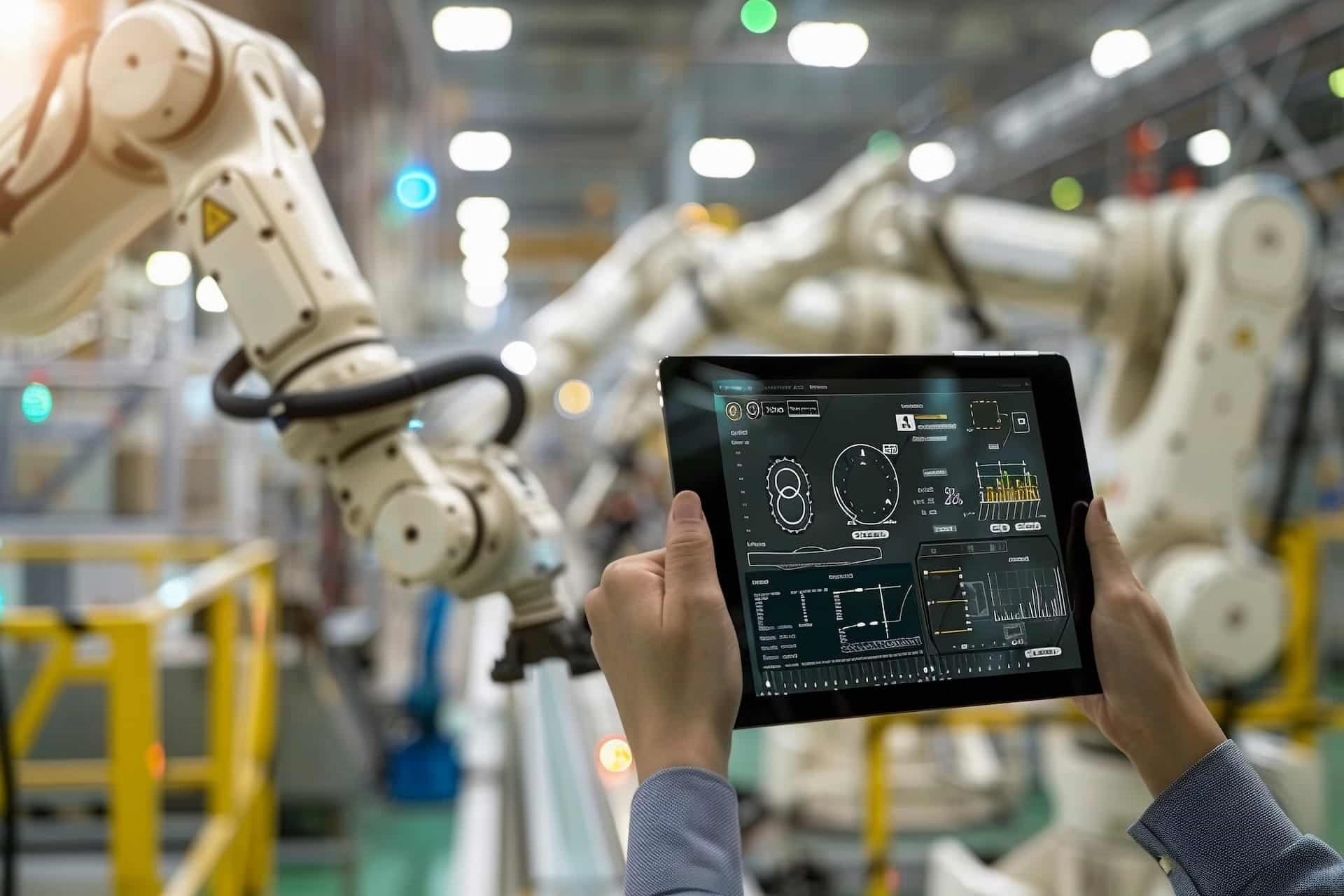
Manufacturing in the Philippines is entering a new phase where success is no longer defined solely by physical infrastructure such as roads, ports, and factories. Instead, the future of modern manufacturing depends heavily on the strength of the country’s digital backbone, the reliability of its cybersecurity framework, and its ability to comply with international standards.
These elements are becoming just as critical as traditional investments to attract and sustain global partnerships. One of the most pressing needs for the Philippines is the reinforcement of cybersecurity and regulatory compliance. As trade missions from China highlight growing interest in sectors like electronics and digital services, the Philippines faces the challenge of meeting global expectations for secure and transparent operations.
Similarly, recent agreements with the United States and Japan in areas like semiconductor and nickel production emphasize the importance of regulatory frameworks that align with international norms. Without a strong system for protecting data, enforcing compliance, and ensuring supply chain integrity, the country risks losing competitiveness in an industry that increasingly relies on trust and security.
Another key factor is connectivity. Smart manufacturing processes, which rely on automation, machine-to-machine communication, and real-time analytics, demand robust and high-capacity digital networks. Dark fiber infrastructure provides the essential foundation for this transformation, allowing manufacturers to operate with the speed, reliability, and scalability needed for advanced production systems.
By investing in fiber connectivity and complementary technologies such as 5G, the Philippines can enable factories to fully embrace digital integration and ensure that production facilities remain globally competitive. The evolution of manufacturing also requires a skilled workforce and a supportive digital ecosystem.
With its cost-competitive talent pool, the Philippines already presents an attractive labor environment for foreign investors. However, as industries shift toward data-driven operations, the demand for professionals trained in cybersecurity, robotics, and data analytics will grow rapidly. Building research and development capacity, expanding university programs, and offering policy incentives for innovation will help transform the Philippines from a hub of assembly into a center of technological advancement.

How Computrade Technology Philippines Enables Secure Digital Adoption?
Computrade Technology Philippines (CTP) supports organizations in the Philippines in shifting to digital operations in a way that is secure, scalable, and aligned with global best practices. The company enables secure digital adoption through several key pillars:
Security-First Infrastructure and Alliances
CTP offers security solutions built around multiple layers: physical, operational, and software. It partners with globally recognized cybersecurity technology providers such as Darktrace, Defenxor, Malwarebytes, Cloudflare, among others. These alliances allow CTP to bring advanced tools that help detect and mitigate sophisticated threats proactively.
Cloud, Data, and AI Capabilities with Compliance
CTP helps businesses move workloads to the cloud, manage data securely, implement encryption (both at rest and in transit), and maintain compliance with industry and regulatory standards. Their services include cloud migration, backup, cost optimization, database management, and providing AI-powered insights—all of which help reduce risk while accelerating innovation.
Managed Security Operations & Long-Term Support
CTP provides managed security services: SOC (Security Operations Center), ongoing threat hunting, centralized security management, schedule and patch management, and continuous monitoring. Such ongoing support helps ensure that once digital systems are in place, they remain resilient over time—not just secure on day one.
Local Presence with Global Standards
Although it leverages international alliances and tools, CTP maintains local presence and expertise. This lets them better understand local business contexts, regulatory requirements, and threat landscapes. This hybrid approach ensures global best practices (security, reliability, data protection) are adapted for the Philippine environment.
Aligning with Broader National and Regional Digital Infrastructure Trends
The Philippines is currently attracting large-scale investment in digital infrastructure, semiconductor supply chains, critical minerals, energy, ports, and connectivity. These trends increase the importance of secure, resilient systems to support infrastructure growth. CTP is well positioned to support entities participating in these national priorities—whether those are government, telecom, finance, or manufacturing—by supplying tools and practices that uphold security and trust.
Smart Manufacturing and Digital Ecosystems

Smart manufacturing refers to the integration of advanced digital technologies across industrial operations, enabling factories to become more efficient, flexible, and data-driven. It involves the fusion of physical systems (machines, sensors, materials) with software (analytics, control systems) to optimize production, reduce waste, improve quality, and enable agility in responding to market changes.
Digital ecosystems are the interconnected networks of technologies, infrastructure, organizations, and policies that support smart manufacturing includes supply chains, logistics, energy systems, regulation, workforce skills, data platforms, and communications infrastructure.
AI, Automation, and Industry 4.0 in Electronics and Semiconductors
In the electronics and semiconductor sectors, adoption of AI and automation enabled by Industry 4.0 principles is reshaping how products are designed, manufactured, tested, and delivered. Smart sensors, real-time data monitoring, machine-learning-based predictive maintenance, robotics, and advanced process control are being deployed to improve yields, reduce downtime, and accelerate innovation cycles. Governments and firms are increasingly recognizing the need to build not only raw production capacity but also the digital systems, talent, and regulatory frameworks that enable these advanced capabilities.
Agritech, Logistic Tech, and Cross-Sector Digital Adoption
Beyond heavy industry and electronics, smart manufacturing’s principles spill over into agritech, logistic tech, and across sectors. In agritech, digital ecosystems help optimize crop yields, traceability, supply chain efficiency, and sustainability through sensors, data analytics, and automated systems.
Logistic technology leverages automation, optimization algorithms, tracking and visibility tools, cold chain management, and improved connectivity to reduce cost, latency, spoilage, and environmental impact. Cross-sector adoption means that sectors which historically were not tech-intensive are now integrating digital tools for planning, forecasting, sustainability, compliance, and efficiency. In the Philippines, partnerships under infrastructure investment and supply chain modernization—including support for agribusiness as part of a broader plan to deploy technology more widely in the economy.
Cloud, 5G, and Data Centers Powering the Next Wave of Growth
The growth of cloud computing, 5G networks, and data center infrastructure is foundational to enabling modern digital ecosystems. Cloud platforms allow scalable computing, storage, analytics and the sharing of data across locations; 5G offers high bandwidth, low latency, and pervasive wireless connectivity needed for real-time applications, IoT, private networks, and factory floor automation.
Data centers, often sited with considerations for latency, energy, and connectivity, serve as the backbone supporting storage, computational resources, redundancy, and resilience of operations. In the Philippines, investment focus is increasing in telecom modernization, policies to support infrastructure, and enabling technologies to attract investment in semiconductors, clean energy, supply chain improvements, and critical minerals.
Also Read: Cloud Computing in Manufacturing: The Edge Philippine Factories Need
The Workforce Factors

The Philippines is currently navigating a dynamic juncture in its economic development, where workforce considerations are playing an increasingly central role in enabling the country to attract investment, maintain competitiveness, and foster sustainable growth. Key attributes include a largely young labor pool, cost-competitiveness, and increasing skill specialization.
Employers are focusing not only on raw labor supply but also on quality such as educational background, training, regulatory compliance, digital capabilities, and adaptability to global standards are now essential. The interplay between foreign investment opportunities (across sectors such as manufacturing, green energy, digital services) and local workforce readiness determines how much the Philippines can capitalize on these emerging opportunities.
Developing Cybersecurity and Compliance-Ready Talent
As investments in technology, digital services, and smart manufacturing expand, there is an escalating demand in the Philippines for professionals who are not only technically competent but also versed in cybersecurity best practices and regulatory compliance. The complexity of global supply chains and data flows means that breaches, non-compliance, or mishandling of data can carry heavy costs.
Building talent in this space involves integrating cybersecurity principles into university curricula, offering certifications, running hands-on training programs, and ensuring that both public and private sectors understand standards like data privacy, risk management frameworks, and compliance with international standard.
Bridging Global Manufacturing Standards with Local Expertise
Increasing trade and investment flows, especially in electronics, renewable energy, smart manufacturing, and infrastructure, bring with them high expectations for quality, safety, sustainability, and environmental compliance. For Philippines to fully benefit from trade missions, bilateral agreements, and foreign capital inflows, local workforce must be able to meet or exceed the standards that global partners require.
This means upskilling in lean manufacturing, ISO and other quality management systems, environmental regulations, emissions control, waste management, and safety protocols. Local training programs, partnerships with multinational corporations, and exposure to global best practices are needed to close the gap between what international investors expect and what local firms typically deliver.
Building a Sustainable Digital Talent Pipeline in the Philippines
To support growth in tech-driven sectors, the Philippines needs a steady supply of digital talent that is resilient, continually learning, and responsive to evolving industry demands. This involves fostering STEM education from early levels, encouraging specializations in areas such as AI, cloud, data analytics, cybersecurity, and digital operations.
Equally important are vocational programs, mentorship, internships, and industry-academia partnerships that allow graduates to gain real-world exposure. Incentivizing retention of home-grown talent, providing continuous professional development, and supporting mobility between regions will help ensure that talent bottlenecks do not undermine the country’s competitiveness.
Policy, Partnerships, and the Road Ahead
The trajectory of the Philippines’ digital economy will depend heavily on policy reforms that enable international cooperation, investments, and resilient growth. As geopolitical and economic currents shift, the country must calibrate its policy structures to attract collaboration, safeguard its interests, and build capacities that can compete on a regional and global scale.
Strategic partnership example with neighbouring countries as well as major powers—offer opportunities to access technology, capital, and research networks. Meanwhile, forward-looking regulation and investments in infrastructure and human capital are essential to ensure that the gains of digital transformation are distributed, sustainable, and resilient in the face of global disruptions.
Below are three key areas where policy and partnerships should be focused in shaping a future-ready digital Philippines.
Luzon Economic Corridor as a Blueprint for Regional Cooperation
The concept of the Luzon Economic Corridor can serve as a model for enhancing regional cooperation across infrastructure, trade, and industrial development. Luzon’s existing connectivity, population density, and economic activity make it a logical focal point for integrating transport, energy, logistics, and digital infrastructure.
By coordinating infrastructure projects (ports, roads, power grids, broadband) across local government units, national agencies, and private stakeholders, the Corridor could reduce transaction costs, speed up supply chains, and attract foreign direct investment in key industries. Policy incentives, spatial planning, and streamlined permitting will be critical to ensure that developments are coherent, equitable, and maintain environmental and social standards.
Cross-border Digital Investments and R&D Collaborations
International investment missions and diplomatic efforts are opening channels for cross-border flows into technology, green energy, manufacturing, and digital services. Recent engagements with China illustrate that investors are interested in areas such as smart manufacturing, renewable energy, infrastructure, digital services, and agri-business. Establishing clear and predictable investment frameworks, as well as incentives for R&D partnerships will be essential.
Collaborations between universities, private sector tech firms, and international research institutions can help transfer knowledge, build local capabilities, and spur innovations tailored to domestic needs. Trade-missions, bilateral agreements, and multilateral participation in R&D grants should be leveraged to attract high-value partnerships rather than just capital influx.
Creating a Resilient, Future-ready Philippines Digital Economy
Building resilience in the digital economy means more than just having fast internet or digital services; it involves preparing for shocks (whether from natural disasters, cybersecurity threats, or supply chain disruptions). Policy must ensure infrastructure redundancy, robust cybersecurity frameworks, and disaster-resilient data centers.
Investment in human capital is equally important: programs for up-skilling, digital literacy, and research capacity must be scaled so that workers and businesses can participate in high-growth digital sectors. Regulatory regimes should be adaptive, ensuring that innovation is not stifled by outdated rules while maintaining standards for privacy, competition, and equity. The path ahead also requires aligning digital transformation with sustainability goals, ensuring that digital infrastructure and processes support environmental stewardship and social inclusion.
It’s Time for Your Business to Partner with CTP
It’s time for your business to take the next step toward growth and resilience by partnering with Computrade Technology Philippines (CTP). As part of CTI Group, CTP is backed by proven experience and professional expertise, ensuring that every solution we deliver is built on a strong foundation of knowledge and reliability.
With the right partner by your side, you can focus on innovation while we help safeguard and accelerate your business success. Don’t wait to transform challenges into opportunities. Let’s move forward together, contact our team by clicking on this link.
Author: Ervina Anggraini – Content Writer CTI Group


